Academic Staff

June 2, 2026, 3:25 p.m.
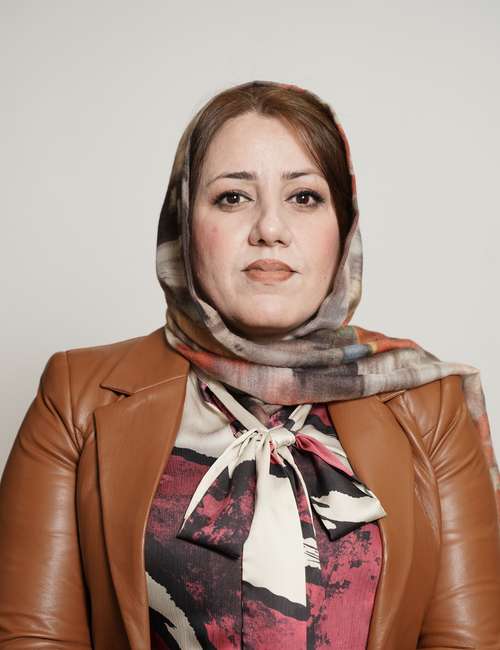
Layla Ahmed Othman (PhD)
None
Assistant Professor in Organic chemistry

Science
College of Basic Education
University of Duhok

  • PhD in Organic Chemistry, College of Science, university of Zakho, 2024.
  • MSc in Organic Chemistry, Collage of Science, Mosul University, 2007.
  • BSc in Chemistry, College of Science, Mosul University, 2004.

My teaching experience at the University of Duhok began in 2011, when I started working in the College of Science, Department of Chemistry, and continued there until 2018. During these years, I taught a wide range of core chemistry courses, allowing me to build in-depth knowledge and pedagogical expertise. The subjects I taught included organic chemistry, biochemistry, inorganic chemistry, analytical chemistry, and industrial chemistry. This diversity contributed to my comprehensive understanding of the field of chemistry and to the development of teaching methodologies tailored to the nature of each specialization and the needs of the students.

To further expand my academic experience, I taught for one year in the College of Pharmacy. This required adopting teaching approaches that aligned with the students' medical background and focusing on the biological and pharmaceutical applications of chemical concepts. This move provided an important opportunity to develop my skills in connecting the theoretical aspects of the discipline with its practical and professional applications.

In 2019, I moved to the College of Education, Department of General Sciences, where I continue to teach to this day. This transition has allowed me to work with students from diverse disciplines, necessitating more inclusive and flexible teaching methods and a focus on the pedagogical aspects of presenting scientific material. In this context, I strive to foster scientific thinking and encourage students to use experimental and analytical approaches to understand fundamental scientific concepts.

My academic journey, spanning over a decade, has provided me with extensive experience in teaching a variety of courses, working with students of varying abilities, and developing teaching methods that emphasize a deep understanding of the subject matter, stimulate scientific curiosity, and cultivate both practical and theoretical skills. This experience remains a cornerstone of my career and a driving force for continued development and advancement in both teaching and research.

Research

  1. Othman, L. A., Michael, N. S., & Mansour, S. (2025). Biochemical parameters in patients with diabetes and urinary tract infection. QALAAI ZANIST Scientific Journal, 10(4), 1221–1238.
  2. Othman, L. A. (2024). The green approach for the synthesis of some hydroquinoline derivative compound via Hantzsch reaction. Science Journal of University of Zakho, 12(4), 427-435.
  3. Othman, L. A., Mohammed, S. R., & Ali, M. K. (2023). A flexible route to synthesis and molecular docking of some new quinoline derivatives through imine and cyclization processes. Oriental Journal of Chemistry, 39(2).
  4. Othman, L. A., Mohammed, S. R., & Khalid, M. (2022). Synthesis and characterization of some new quinoline derivatives derived from 2-amino benzonitrile. Indian Journal of Heterocyclic Chemistry, 32(04), 487-492.
  5. Othman, L. A., & Shaswary, I. A. (2018). Chemical constituents and antibacterial activity of Prosopis farcta (Fabacea) fruit from Iraq-Kurdistan region. Journal of Duhok University, 21(2), 59-67.
  6. Basheer, H. A., Ahmed, M. S., & Othman, L. A. (2016). Synthesis of some new oxadiazole and tetrazole derived from naproxen drugs. Swift Journal of Pharmacy and Pharmacology, 1(1), 11–15.

My research interests throughout my academic career have focused on organic chemistry and biochemistry, given their pivotal role in understanding the molecular structure and interactions of biomolecules and developing impactful scientific, industrial, and medical applications. This interest has driven me to stay abreast of scientific advancements in these two disciplines and to explore research topics that bridge theoretical foundations with practical applications.

In organic chemistry, I concentrate on studying organic reactions and their mechanisms, and developing novel methods for synthesizing organic compounds of pharmaceutical and industrial importance. I am also interested in analyzing the structural properties of compounds and their correlation with their chemical and biological activity, which opens avenues for designing novel compounds with enhanced efficacy.

In biochemistry, my interests lie in understanding biological processes at the molecular level, studying proteins, enzymes, and other biomolecules, and analyzing their roles in intracellular biological pathways. This research approach contributes to bridging the gap between chemistry and the life sciences, and to interpreting biological reactions in diagnostic and therapeutic contexts. Combining organic and biological chemistry within a single framework allows for a holistic view of biological reactions from a precise chemical perspective, and presents an opportunity to develop interdisciplinary research that contributes to scientific advancement. This interest also enhances my ability to supervise student projects and applied research related to the pharmaceutical and analytical industries.

These research interests remain a constant motivation for me to develop my knowledge, participate in academic and research activities, and strive to produce scientific knowledge that serves the academic, medical, and industrial communities.

Since 2011, I have been actively involved in supervising undergraduate chemistry graduation projects, a key role in my academic career at the University of Duhok. My supervision has encompassed diverse projects in both organic and biochemistry, providing me with extensive experience in guiding students through their scientific research and directing them towards rigorous and comprehensive research methodologies.

Through my supervisory work, I have focused on assisting students in selecting appropriate research topics and training them in designing laboratory experiments and analyzing results according to sound scientific standards. I have also concentrated on developing their skills in writing scientific reports and preparing final presentations, thereby enhancing their critical thinking and independent research abilities.

Supervising graduation projects has allowed me to follow students' academic progress from initial ideas to final completion, fostering an interactive environment for scientific guidance and encouraging innovation. Through continuous work with students over many years, I have been able to contribute to building a generation capable of understanding advanced chemical concepts and applying them in research and professional contexts. This supervisory experience remains an important aspect of my academic work, as it reflects my commitment to developing students’ research capabilities, enhancing the quality of education, and contributing to the graduation of scientific personnel capable of pursuing postgraduate studies or engaging in applied fields of chemistry.